
Abstract
Human Resources (HR) is significant in shaping the organization’s culture, handling all issues among team members, managing talent, and fostering strategic changes. Consequently, HR professionals often tend to fall into a burnout situation. This research paper analyses HR resilience, how consistency and adaptability can support HR professionals to overcome burnout situations effectively. This paper includes theoretical approaches along with certain studies and real-world organizational practices. The paper aims to provide a comprehensive framework for understanding HR resilience and mitigating burnout circumstances.
Introduction
Today’s era is known as the digital era; people can sense the rapid growth in technology. It delves into the enhancement in every sector. Today’s era is all about employee expectations and increasing the demand for efficiency. Human Resource professionals tend to be at the nexus of these enhancements. They manage the well-being of employees, but overlook their well-being. In many organizations, burnout takes place among HR professionals and other team members. Henceforth, it is degrading personal performance along with organizational growth. This paper delves into resilience as an effective factor to overcome burnout, focusing on the sub-factor of consistency and adaptability.
Analysing Key Concepts
- Burnout in the HR Domain: Burnout occurs when an individual feels exhausted due to workplace stress. Stress in the workplace is the potential cause of a burnout situation and affects an individual mentally. As per Maslach and Jackson, burnout can be considered through emotional depletion, depersonalisation, and reduced personal proficiency. In the HR domain, burnout can be observed through emotional exhaustion, distrust towards employees, and lack of progress in both organizations and HRs as well.
- Resilience: Resilience is crucial for overcoming the challenges and handling burnout situations and stress in the workplace effectively and on time. In the HR domain, resilience is pivotal to handling all the stress, giving the best performance, and fostering a positive work environment.
- Consistency: Consistency demonstrates the proper behaviour, transparent communication, and performance. In the HR domain, it indicates the ethical standards, proper policy enforcement, and transparent communication.
- Adaptability: Adaptability is the method through which an individual can organize their work schedule and manage their stress accordingly. They can utilize certain strategies to implement positive working conditions and an environment. In the HR domain, adaptability denotes the flexibility, problem-solving skills, implementation of new technologies, and coordination & response to employee needs.
Factors of Burnout in HR
After analysing key concepts, it is significant to understand every factor that causes burnout in the HR domain. It is required to mitigate the risk of burnout among HR professionals and other employees. These factors are:
- Emotional Drainage: HR professionals frequently deal with employee conflict, boost motivation, and handle all the grievances. Consequently, they do not get any time for themselves, and as a result, they drain their emotions.
- High Expectations: Generally, HR professionals are under pressure to be a strategic partner and simultaneously handle all the administrative activities as well. It leads to high expectations from them, which creates a conflict and ambiguity.
- Lack of Resources: It includes a lack of emotional support, working under a tight budget, insufficient staff, and a lack of executive support. Henceforth, it increases the possibilities of frustration and burnout for HR professionals.
- Organizational Moderations: Frequent changes and overworking can lead to a hectic work culture. Here, changes denote the policy modifications, any mergers, or any kind of restructures that foster stress levels for HR professionals. Refer to T1 to analyse the statistics of employee burnout.
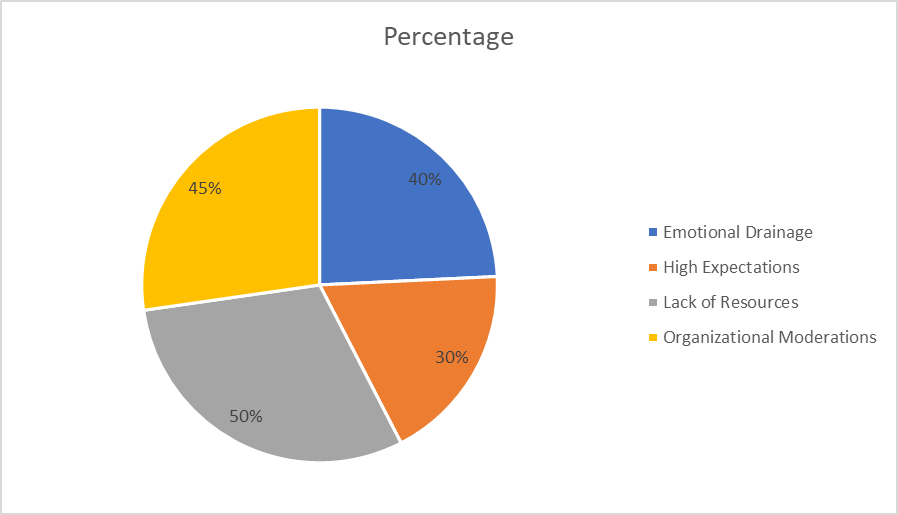
T1. Factors of Burnout among Employees in 2024
Research on HR and Other Employees’ Burnout Situations
Recently, a survey was conducted regarding burnout conditions of employees and the challenges to overcome them. Scholar Christina Maslach, who has examined working culture, workloads, and long working hours, has caused burnout in workplaces. Despite awareness, many employees still face emotional drain, improper mental health, and burnout. Many scholars have shown surveys where many of the employee’s report burnout. Let’s have a look at those percentages of employees and how they are challenged to overcome them.
- Existence of Burnout: Despite awareness of mental well-being, there is still burnout in a certain organization. In research, it is found that 37 percent of HR professionals still face burnout. Since 2021, although the percentage of burnout has decreased, however, out of 3 HR, 1 HR is struggling with burnout.
- Burnout Affects Retention: Retention and employees’ well-being are most crucial in an organization. Burnout not only degrades personal achievement, but it also makes an organization and its team less productive. Let’s have a look at the results of the research, which are:
- 1.7 times of employees are unwilling to work due to heavy workloads
- 1.6 times of employees agree to take a loss and to get leave
- 1.4 times of employees agree to be in the organization next year
- 2.1 times of employees are searching for jobs
- Burnout Among Leaders: The research has also revealed that apart from HR and other employees, leaders also face burnout. The pressure of responsibilities, along with no recognition and rewards. 36% of Executives, 45% of Directors, 41% of Managers, and leaders face burnout in the workplace. Addressing and implementing proper strategies are required to maintain and balance the workplace.
- Burnout Rates in the IT Sector: It is notably mentioned that employees from the IT sector are at risk of high burnout. High deadlines, meeting targets, and rapid technological advancement cause stress and burnout. 48% of employees from IT, 39% from industrial, 38% from consulting firms, and so on, are at risk of high burnout. To know more, refer to T2 below.
T2. Burnout Rates
- Burnout Among Younger Employees: Younger generations are usually anxious about their careers; hence, they join organizations and try to put in their efforts. However, they feel pressurized and face challenges in adopting the latest technology and work culture. By balancing and handling personal and professional life, it becomes exhausting and can lead to burnout the youngsters. In research, it has been found that around 48% of employees (26-35 years old) reported burnout.
- Fewer Burnout Employees: Generally, new or old employees are less likely to burn out in an organization. However, the newest employees are facing burnout. Employees working in an organization for a longer period have faced lower burnout. This reveals that the newest employees feel low burnout due to their enthusiasm, and old employees get habituated to such a toxic working culture. Henceforth, organizations are required to promote a healthy working culture by supporting employees through resilience. Resilience can be disguised as proper listening to employees’ issues, what challenges they are facing, and what training they require leads to employee satisfaction. Consequently, employees enjoy working and are productive. Let’s discuss resilience in overcoming burnout situations in the next paragraph.
Resilience in Overcoming Burnout Challenges
It has cleared the factors of burnout; the next essential element is its time to understand resilience. What is resilience? How does it work? What positive changes occur by providing support to professionals? What are the benefits of Resilience in HR? Let’s explore the resilience in depth.
- Psychological Resilience: Psychological resilience plays a significant role in maintaining a positive work culture in an organization. Moreover, certain strategies help in recovering from stress quickly and boost mental health by implementing consciousness and cognitive reframing.
- Organizational Resilience: It is considered to establish a supportive organizational system, sufficient resources, and strong leadership, fostering resilience in the HR domain.
- Social Support: It includes effective mentorship, healthy peer connections, and team collaborations to mitigate the chances of burnout and frustration. In the next column, the research paper will talk about consistency as a sub-factor of Resilience. Let’s have a look at the next column.
Consistency As a Sub-factor of Resilience
Consistency plays a significant role in HR practices. It boosts fairness, trust, supportive conflict resolution and promotes a healthy work culture. Certain characteristics mentioned below give in-depth knowledge of consistency. These are:
- Implementing Trust: Implementing or establishing trust among employees is a key factor to boost consistency in any organization. Consistent behaviour and trust reduce the conflicts and emotional drainage.
- Policy Enforcement: Policy is the backbone of any organization; hence, it must be fair, transparent, and reliable. It fosters a stable work environment.
- Ethics and Leadership: Consistent, healthy leadership encourages ethical behaviour and establishes organizational ethics and team morale. Apart from consistency, adaptability is also another significant sub-factor of resilience. The research paper provides a comprehensive concept of adaptability in the next paragraph.
Adaptability As a Sub-factor of Resilience
It has been seen that the workplace and working culture are changing constantly according to their needs. Hence, HR professionals are pivotal to adapting to the changes and updating themselves with the latest trends and innovations in technology. It is important to plan proper strategies to implement those changes effectively. Here are a few strategies mentioned below that will support HR practices. These are:
- Embracing Change: Adapting a change must be an opportunity for HR professionals to grow their professionalism and work culture.
- Advances in Technology: HR is required to adapt the technological advancements to enhance their efficiency and manage the workload through advanced management tools.
- Effective Strategies: Effective strategies are required to gather real-time feedback and analyse the changes in organizational systems or procedures. In the next paragraph, this research paper explores other helpful strategies that enhance work culture and HR resilience.
Strategies to Enhance HR Resilience
After understanding burnout conditions, consistency, adaptability, and strategies to address burnout situations, it is also required to understand “How to enhance HR resilience”. Effective strategies are pivotal to maintaining the healthy well-being of an individual, which also leads to the growth of the organization. Many organizations have adopted certain measures to enhance their hr resilience. Let’s explore a few of them. These are:
- Proper Training: Proper and continuous training develops emotional intelligence, reduces frequent conflicts, and fosters strong leadership.
- Programmes Based on Well-being: It is required to schedule a programme based on how to maintain personal, professional, and mental well-being among HR professionals and other employees.
- No Ambiguity: An unambiguous communication based on the roles and responsibilities of employees and HR professionals reduces the chance of conflict and fosters individual and professional growth.
- Empowerment and Authority: HR must be empowered with decision-making authority to maintain resilience and job satisfaction.
- Acknowledgments: Acknowledging employees’ efforts and rewarding those efforts motivates employees and enhances resilience effectively. In the next paragraph, the research paper will discuss the measurement of HR Resilience by implementing all these strategies effectively.
Measuring HR Resilience
After getting an idea about HR Resilience, Consistency, Adaptability, and Burnout Situations, it is also necessary to analyse certain tools through which HR Resilience can be measured. Measuring HR Resilience is an approach to find out the effectiveness of the HR department and among other employees. So, let’s have a look at it!
- Resilience Scales: Resilience is a tool that can depict an individual’s resilience level, such as the Connor-Davidson Resilience Scale (CD-RISC).
- Burnout Inventories: It supports an organization by measuring the burnout level and supports the professionals who are at risk of burnout situations. An example of burnout inventories is the Maslach Burnout Inventory (MBI).
- Health Index Metrics: Every organization includes the Organizational Health Index Metrics, which are used for measuring the engagement of employees, turnover, and HR effectiveness. It provides an effective measure of the employees’ and HR professionals’ resilience.
Action Plan for HR to Address Burnout and Overcome It
- HR is the Backbone of Resilience: HR is worthy to show empathy to other employees through effective resources, training, and understanding their issues. HR has the power to promote resilience in an organization through empathy during challenging times.
- Proper Support and Training: Employees are required to be valued and understand their working challenges. They need proper strategies, tools, and training to increase productivity, client handling. These are the ways through which an organization can exist in the long run.
- Transparent Communication and an Action Plan: HR professionals are required to make transparent communication. It includes organizational goals and, as much as possible, engages with managers and leaders to foster an actionable plan and strategies.
- Rewards & Recognition for Employees: Employees who handle loads of tasks are required to get recognition and praise. Hence, consistent rewards and recognition are essential to motivate and recognise their efforts. Implementing strategies, no delay in recognition, and celebrating all the achievements and contributions lead to the productivity and growth of the organization.
Implications of Certain Strategies for HRs
- Inclusiveness of AI Technology: It is required to include AI in the workplace to increase productivity. This supports HR to focus on other activities as well, and to implement resistance.
- Adopting a Hybrid Work System: Flexibility fosters work-life balance between professional and personal. A working system denotes a remote work policy and a hybrid system. However, it is also required to maintain these working systems effectively for the smooth functioning of the organisation.
- Handling Diversity: HR requires resilience to handle the complex, diverse cultures in an organization. Many employees are from diverse cultures and traditions, every employee has their unique working style, hence, HR requires a high level of resilience to manage all.
Case Studies
Now, let’s analyse certain cases that will give a comprehensive idea about the resilience in the HR domain. Case studies are required to determine the conditions of HR resilience in other organizations and how other reputed organizations combat HR burnout situations. These are:
- Google: Based on data, Google’s HR professionals make decisions, support their employees, and foster a resilient work culture.
- SAP: With the investment in leadership and other programs, which results in less burnout and frustrated situations among HR departments. With constant support of training and guidance, the organization has reported a 30 percent decline in burnout. Moreover, it also introduces the “Employee Well-being Initiative” to maintain resilience and handle managerial adaptability.
- Tata Consulting Services (TCS): TCS is one of the most significant organizations that establishes rotational shifts for employees. Moreover, schedules many programs to upskill HR efficiency and enhance adaptability.
- Microsoft: In Microsoft, an initiative has been adopted, namely “Employee Pulse”. The purpose of this initiative is to support HR professionals by conducting a survey. In this survey, frequent questions are asked to analyse the working stress and gather the correct data. Amazingly, 25 percent of stress has declined among HR professionals and others.
These case studies prove that balanced and well-structured strategies can support HR and mitigate burnout. To know more, refer to T3 below:
| Organization | HR Resilience Strategies | Burnout Reduction (%) | Source |
| Supporting employees, consistent employees’ analytics | 32% | Google re:Work Report, 2023 | |
| SAP | Leadership, emotional, and consistent support | 30% | SAP Annual Report, 2022 |
| TCS | Role rotation, upskilling | 27% | TCS HR Strategy Report, 2021 |
| Microsoft | Consistent feedback, pulse surveys, and an effective work policy | 25% | Microsoft Work Trend Index, 2023 |
| Accenture | Structured wellness programs, hybrid work culture | 29% | Accenture Global Report, 2022 |
T3. Burnout Reduction After Implementing HR Resilience Strategies
Note: These organisations are selected based on publicly available reports and industry benchmarking studies.
Conclusion
In a nutshell, it can be analysed that HR professionals are required to implement strategies rather than skills. Burnout is a phenomenon that degrades organizational growth along with the individual’s personality. By implementing consistency in emotional support, values, clear communication, and quick adaptiveness of technology and working cultures, support for growth from all endeavours is provided. It is required to ensure that all the employees’ efforts are recognised and rewarded, and maintain resilience through well-structured strategies and clarity. Moreover, it is also significant to value all the employees and address their challenges effectively without delay.

